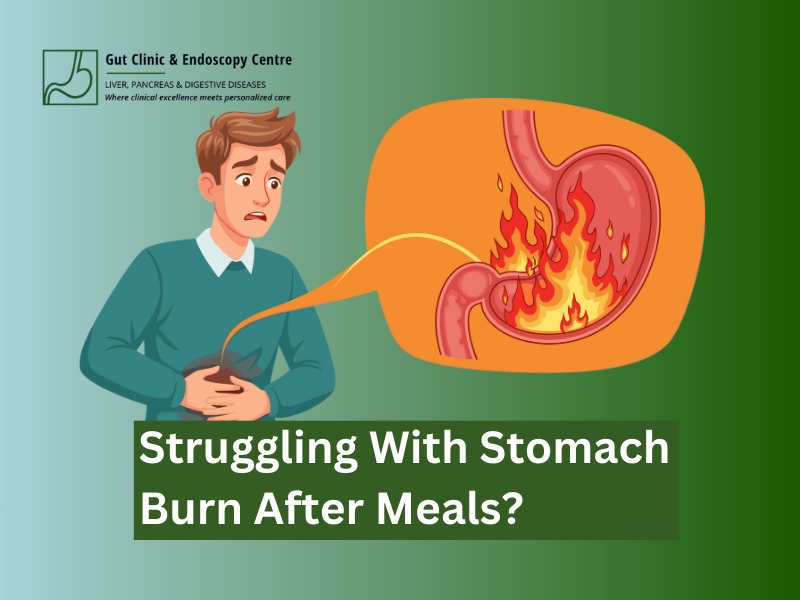
Many people experience a burning feeling in the stomach after meals. Sometimes it feels like warmth in the upper abdomen, and sometimes it feels like sharp discomfort that travels up the chest. Occasional episodes are common, but if the burning sensation occurs often, it may be a sign that your digestive system needs attention. Stomach burning after eating can happen due to diet, lifestyle, stress, infections, and many other reasons.
Understanding the cause can help you get the right treatment at the right time. In this blog, we explain why this happens, what it may mean, and what you can do to feel better.
What Does a Burning Sensation in the Stomach Feel Like
A burning sensation in the stomach can feel different for each person, but most describe:
- A warm or burning feeling in the upper abdomen
- Discomfort that increases after meals
- A sour or acidic taste in the mouth
- Nausea or heaviness after eating
- A feeling of food sitting in the stomach for too long
This usually happens when digestive acids irritate the stomach lining or the food pipe. Certain foods, meal timings, and underlying conditions can increase this irritation.
Common Causes of Stomach Burning After Eating
Several conditions can lead to burning in the stomach after meals. These are some of the most common causes.
Acidity and Acid Reflux
Acidity happens when stomach acids move up into the food pipe after eating. This can cause a burning sensation in the chest and stomach. Oily food, late dinners, overeating, and lying down soon after meals can trigger this reaction.
Gastritis
Gastritis is inflammation of the stomach lining. When the lining becomes irritated, even simple meals can cause pain or burning. It may be caused by infections, regular painkiller use, or long gaps between meals.
Spicy or Oily Foods
Foods that are very spicy, deep fried, or heavy can irritate the stomach and delay digestion. This often leads to a burning sensation within one or two hours after eating.
Food Intolerance
Some people experience burning because the body cannot digest certain foods well. Common examples include lactose in milk, gluten in wheat, and certain packaged foods. This intolerance can cause gas, bloating, and a burning sensation.
Helicobacter Pylori Infection
This is a very common stomach infection. It affects the protective layer of the stomach, making it more sensitive to acid. People with this infection often experience burning, nausea, bloating, and pain.
Stomach or Duodenal Ulcers
Ulcers are small wounds in the lining of the stomach or the upper part of the small intestine. These ulcers can cause burning that becomes stronger after eating or when the stomach is empty.
Stress and Irregular Eating Patterns
Stress affects digestion through the gut-brain connection. When you skip meals, eat too fast, or eat at irregular times, the stomach produces more acid than necessary. This can cause frequent burning sensations.
When Is Stomach Burning a Sign of Something Serious
A burning sensation is usually manageable, but certain symptoms should never be ignored. These red flags may indicate a more serious condition.
- Unexplained weight loss
- Vomiting or blood in stool
- Intense pain that does not improve
- Burning that continues for more than one week
- Difficulty swallowing
- Pain that wakes you up at night
If you notice any of these signs, you should seek medical advice as soon as possible.
Quick Relief Tips for Stomach Burning
These simple tips can help ease burning and discomfort quickly.
Drink cold milk or coconut water
These natural options soothe the stomach lining and reduce acid irritation.
Eat smaller meals more frequently
Large meals increase the pressure on the stomach. Smaller meals are easier to digest and reduce acid production.
Avoid spicy, oily, and acidic foods for a few days
This gives the stomach time to heal and settle.
Do not lie down immediately after eating
Wait at least two hours to prevent acid from flowing back into the food pipe.
Try simple home remedies
- Warm jeera water
- Ajwain water
- A ripe banana
- A small bowl of curd
These can help ease discomfort and improve digestion.
Use antacids carefully
Over-the-counter antacids may help with occasional acidity, but they are only for short-term relief. Frequent use should be discussed with a doctor.
Long-Term Management and Prevention
Making a few changes in daily habits can greatly reduce the chances of stomach burning.
- Eat a balanced diet with vegetables, fruits, whole grains, and fibre
- Drink enough water throughout the day
- Keep regular meal timings
- Limit tea, coffee, soft drinks, and packaged juices
- Avoid smoking and alcohol
- Reduce stress through walking, yoga, or breathing exercises
Consistent lifestyle changes can improve digestion and prevent repeated burning sensations.
How Doctors Diagnose Stomach Burning
If symptoms are frequent, your doctor will first understand your history and examine the abdomen. Depending on your symptoms, the doctor may recommend:
- Blood tests to check for infection or inflammation
- Tests for Helicobacter pylori infection
- Ultrasound if needed
- Endoscopy for a clear view of the stomach when symptoms persist
Endoscopy helps identify gastritis, ulcers, or infections early so that treatment can be started in time.
Treatment Options
Treatment depends on the underlying cause. Some of the common options include:
- Antacids or medications that reduce stomach acid
- Treatment for Helicobacter pylori infection
- Medicines that help repair the stomach lining in gastritis
- Dietary advice to prevent irritation
- Endoscopic procedures in more serious cases
Your gastroenterologist will suggest the right approach after understanding your symptoms and test results.
When You Should Visit a Gastroenterologist
You should consult a gastroenterologist if:
- Your stomach burns after every meal
- Symptoms last for more than one week
- You experience frequent nausea or vomiting
- You have difficulty eating or swallowing
- You have a history of ulcers or chronic acidity
Early consultation prevents complications and gives you faster relief.
In Conclusion
Stomach burning after eating happens to many people, but when it becomes frequent, it needs proper attention. Most underlying causes can be treated with timely diagnosis and simple lifestyle improvements. Listening to your body and seeking guidance early helps prevent persistent burning, acidity, or irritation from developing into a more serious digestive issue.
Do Not Let Stomach Burning Disrupt Your Routine
If stomach burning or acidity is affecting your daily comfort, expert evaluation can help you find lasting relief. The Gut Clinic and Endoscopy Centre in Delhi offers advanced diagnosis, endoscopy services, and personalised treatment for all digestive concerns. Book a consultation to better understand the exact cause of your discomfort and start improving your gut health.
FAQs
Why does my stomach burn after eating, even when I eat light food?
Stomach burning can occur due to acidity, gastritis, infections, or sensitivity to certain foods. Even simple meals can irritate the stomach if the lining is inflamed.
How do I know if my stomach burning is serious?
If the burning lasts more than a week, disturbs sleep, or comes with vomiting, weight loss, or blood in stool, you should see a gastroenterologist.
Can stress cause stomach burning?
Yes. Stress increases acid production and slows digestion, which may trigger or worsen stomach burning.
Which foods should I avoid when I have stomach burning?
Spicy, oily, fried, and acidic foods should be avoided. Limit tea, coffee, citrus fruits, and heavy meals.
When should I consider getting an endoscopy for stomach burning?
If symptoms continue despite dietary changes or medicines, or if red flag signs appear, an endoscopy helps identify causes like gastritis or ulcers.

 Dr. Kaushal Madan
DM Gastroenterology
Dr. Kaushal Madan
DM Gastroenterology
 Dr. Manav Wadhawan
DM Gastroenterology
Dr. Manav Wadhawan
DM Gastroenterology
 Dr. Sona Kaushal
DrNB Gastroenterology
Dr. Sona Kaushal
DrNB Gastroenterology
 Dr. Ajay Kumar
DM Gastroenterology
Dr. Ajay Kumar
DM Gastroenterology
 Dr. Rishi Raman
DM Gastroenterology
Dr. Rishi Raman
DM Gastroenterology